This interview is part of a series of conversations with participants of the Beyond Patriarchy Co-Learning Journey, which engages men* in learning and building alternatives to patriarchy.
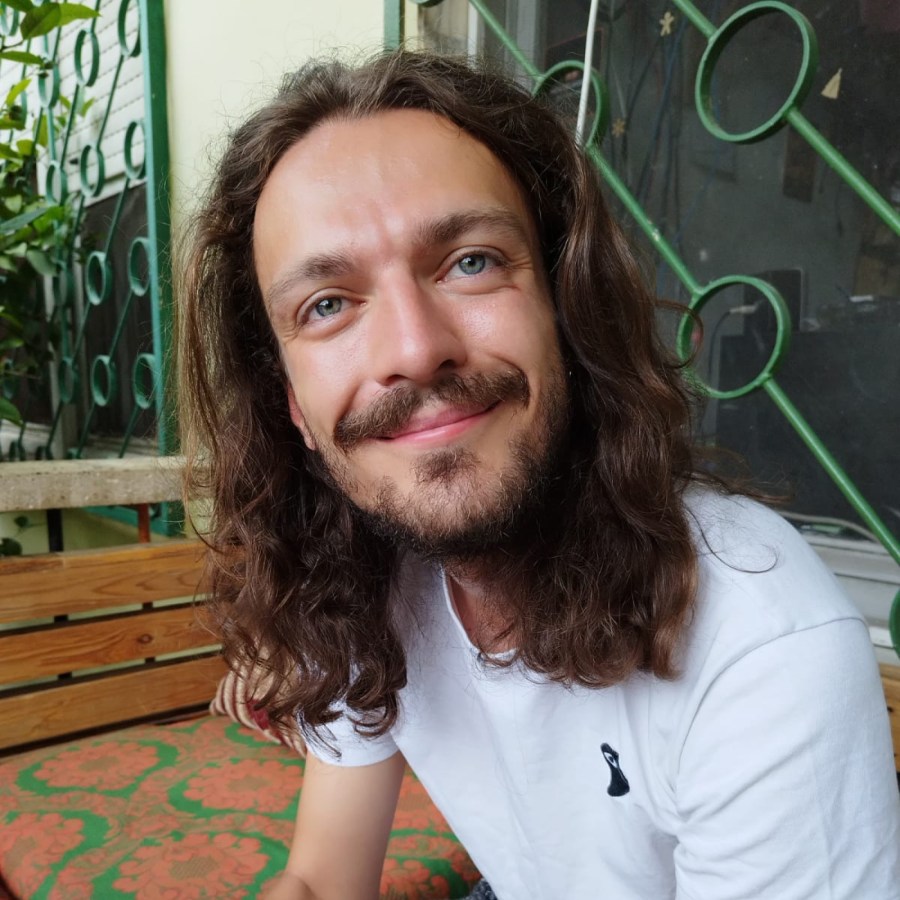
In this generative interview, Joshua Stehr, a participant of the Beyond Patriarchy Co-Learning Journey, explores the connections between patriarchy and disconnection, the role of stories and brave spaces in building shared understandings and accountability, and the inspiration that can be drawn from day-to-day as well as generational shifts.
Joshua Stehr helps organisations increase their regenerative impact through design, research and strategy. He is the Ecosystem Research Lead for Work On Climate, Service Designer at Dark Matter Labs and the Net Zero Cities learning programme, and has designed products for startups like Mended, CountOn, and Bunch, as well as delivering strategic foresight and systemic interventions focused on transforming the food and agriculture sector.
Joshua, imagine that we’re living in a world beyond patriarchy: what does it look like to you, and what was your contribution to getting us there?
It feels safe. People are much more at ease, and not so much on edge. It feels like a joy to interact with people, rather than a worry or a concern.
When I see people and interact with them, I’m interacting with them as people, and people are more present and have shed past traumas, and that isn’t necessarily informing every interaction that comes next. We’re therefore able to be more present with the person, and not acting out of fear or past experiences.
I think there’s just an overarching theme of connection and a buzz around human interaction. When you meet someone new, you’re just really in the moment and you’re really listening to the other person. There’s a lot of respect and yet none of your other anxieties are really very… they’re dormant. I feel like the future I’m imagining is closer to that.
I want to say the media landscape, and general cultural landscape around gender norms has shifted a lot. People feel more comfortable in their own skin and what they feel is authentic to them, rather than what society is telling them they should be. Both men and women are feeling safe and comfortable to express themselves more fully, verbally, emotionally, in embodied ways. And that full expression, that more whole expression, is also contributing to people connecting better, as well. Especially for men, who often are repressing how they feel, and how they want to show up, and feeling constrained by the norms that are put upon them from a young age. They then feel like, I can just be myself. I can feel like I belong when I’m expressing how I feel, or expressing some emotion or desire, and that’s received with a lot of openness.
Thank you for sharing. And the second part of that question was, what was your contribution to getting us there?
My contribution was, first and foremost, creating this change in myself. Being able to express myself fully and overcome the version of myself that’s telling me I should behave in a certain way, or conform to certain things that are against what I want to do, and against what I am, my authentic self. I have learned to actually express myself, despite what others may perceive of me or think that I should be behaving, and that started to influence others around me, especially men, to be more open about how they show up.
I started being more vocal about that, and bringing other men along on this journey to open themselves up.
And my role in taking accountability for that lack of expression, or behaviours that have been harmful in the past, to both men and women – taking accountability for that, showing how it’s possible to change, and sharing that.
My role was actually stepping outside of the bubble and reaching out to men who are maybe creating the most harm from their behavior, but also are the most harmed by the patriarchal system, whether they know it or not. They needed as much support and usually are left out.
Where do you draw inspiration from to envision and construct these futures beyond patriarchy?
This sounds a bit vain, but my first inspiration is from myself, because I’ve seen how I have been in the past and seeing how I am now, and I can see that change is possible. Despite the conditioning and the environments that I’ve been in, it is possible to challenge that and to do things differently.
I’m inspired by anyone that is willing to confront conflict in their life, especially conflict with themselves, and recognise that they’re creating harms, and to tackle those head on. I draw inspiration from the small interactions where people are willing to admit things that they may not have admitted before, or recognise behaviours that they may or may not have. The first step for change is awareness and acknowledgement of these things.
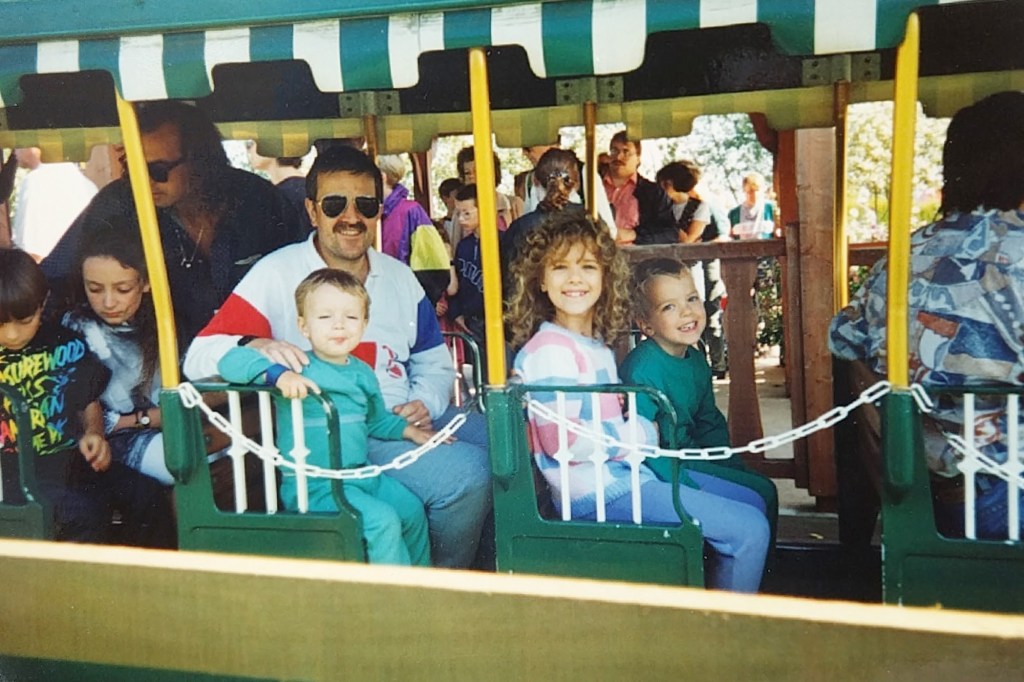
Anytime I see that amongst my friends, or my family, or especially people who are typically closed… I think about my dad, where it takes a few attempts and different lines of questioning or expressions of my own experience for him to then open up about his own situation, his own experience, his own feelings. I look to how his dad was, and already the big differences to how he has shown up as a father, compared to his own dad. There is a big generational evolution from that. I think I draw inspiration from him as well. A few years ago I wouldn’t have imagined myself saying this, but just to recognise the amount of transformation that has happened among past generations and to acknowledge and celebrate that, which I think often goes missed.
Amazing. My next question for you relates to the last few months, specifically: what is an assumption or belief that you’ve changed your mind about while participating in this co-learning journey?
I don’t know if it was a conscious assumption or belief, but I realized that anyone can be patriarchal and exhibit patriarchal behaviors, including women, and everyone plays a role in this patriarchal system in their day-to-day behaviors.
So the story in The Will to Change, a book by bell hooks, where she describes this situation of abuse from her father. Her father was playing probably the most powerful role in perpetuating this patriarchal system – telling her that she cannot do certain things, and then physically punishing her as a result of her not conforming to this rule. Her younger brother didn’t necessarily challenge anything and stand up to this, and followed what her father was saying. Her mother also said, you know, ‘This is what happens when you don’t listen to your father’. And although these are positions of vulnerability, and while standing up against the big, powerful patriarchy is also threatening, it’s still a choice that was made. And even in this private conversation with her mum, she still perpetuated that system and put that ahead of her own daughter’s needs and pain. So that was a really compelling and enlightening story [for me] about how everyone in the system can either continue with the behaviors – that domination and abuse and patriarchy – or they can challenge it.
I thought that the majority of the benefit of this journey would be an aid helping liberate women from the oppression of patriarchy. And that’s definitely still true, but I think there’s a lot of liberation for men too, if we change the system.
I saw many examples in my own life where I hadn’t necessarily connected it to a patriarchal system. Really old memories as well that I hadn’t given any thought [to] since – how certain beliefs put on me as a younger boy, and then into my teenage life, basically created this sense of: it was wrong to express myself and it’s better to just keep [my emotions] to myself. I hadn’t necessarily connected that with patriarchy. I also hadn’t thought about if we actually deal with that, it’s a good intervention to stop them creating more harms on others.
I didn’t understand the connection between patriarchy and this theme of men being disconnected from themselves and their emotions. [I thought] patriarchy is more of a structural, systemic thing – that this feeling of disconnection is a separate topic – but I think they are very intrinsically linked.
And [that connection is] also one of the most powerful reasons why men should actually go into this journey, because the outcome is actually having more of a connection with themselves and their emotions and their feelings, that they’ve lost somewhere along the way. And of course, that shows up in relationships where they’re unable to share how they feel. It shows up at work, where men are usually rewarded for being more ‘rational’ and unemotional.
It’s like, this whole journey that I’ve been on with Beyond Patriarchy is an episode in a wider journey to reconnect with my emotions and my body.
Coming back to the work that you’re doing – these changes in the way you’re thinking and being and acting – how do you ensure that this work is really invested in the wider whole? How do you know the work that you’re doing is having a positive impact beyond your own personal experience?
I think, first of all, I need to find continued ways of telling my story in ways that others can relate to, and it activates something in them and activates a moment of reflection. That’s number one, I would say.
It’s hard to change other people’s minds and try and persuade others. It’s more about, how do you create a space for them to reflect on their own experience and their own journey and challenge themselves?
I think also, finding a way to reach people who are outside of my bubble and are currently creating a lot of harms with their behavior. Having the courage to go outside of people who think like me, and who are hanging out in the same sort of circles.
I think in telling my story, it will also be important to be honest about the harms that I have caused in the past and may still be causing now. Because to put myself in this position of this perfect role model, I think, will put people off and also put me on the back foot as well.
I think it’d be better for me to address these things up front and include them in the narrative. I think that will also be more relatable for people, to see that I’m by no means perfect. I’m still working on a lot of these things. I will share some of the struggles that you’re also facing, and we’re in it together. It’s more as peers, rather than me being this somehow elevated person. I’m still very much on the journey as well.
What commitments are important for you to honor in doing this work?
I think the most important theme that came out of the journey so far is something that I was aware of, but [I was] not necessarily understanding the context and the conditions in which these behaviors formed. It’s this idea of, as a man behaving in quite predatory ways towards women – and it’s certainly been something I’ve dealt with a lot more in the past, but it still has shadows there that aren’t fully reconciled – actively committing to acknowledge when I’m behaving in ways like this, and make amends for times where I’ve acted in that way and put women in uncomfortable positions.
It varies in severity, I would say, but committing to acting differently going forward, and also bringing other men that are acting like this, or have acted like this in the past, to be better role models and be acting in ways that are respectful and safe, and just more in touch with that underlying need of wanting to connect, which is where it often stems from.
It’s important for me to commit to that, because it’s the main thing that I’ve struggled with, and it shows up in various parts of my life, especially in relationships, where it’s not necessarily predatory anymore, but it’s still there. That need for connection isn’t necessarily expressed in the best way.
So it’s important in many ways, because it helps me form more meaningful connections, it’s making amends for past wrongs, and it’s also creating an example for other men to see. The types of environments that I’ve learned this behavior in – university, amongst ‘alpha male types’ that are rewarding this kind of behavior – it’s very easy to fall into that trap. So if I can create an alternative and intervene, then I think that will be a really positive resolution for the kind of behaviors that I was part of when I was younger, and in fairly recent times as well.
Moving towards your vision you outlined earlier, is there something that you feel you still need to let go of to make that happen?
Through the journey that I’ve been on, there definitely emerged a lot of lurking feelings of shame and guilt from the way that I’ve behaved as a man. I think speaking with others in the group around similar behaviours, we were able to share together the context in which this was born, and really work on taking accountability for it.
It’s also helping me to create changes, transformations in myself that will actually last because I’m addressing where they came from, and what the needs are that create this behaviour.
Alongside processing that with others who can relate and have a fair amount of compassion for it, I think I’m also finding ways to use that experience to create positive changes amongst myself and others. So I actually don’t necessarily want to let go of it. But I may want to let go of paralysing shame and guilt that makes me feel like I’m ‘wrong’ and [that] I should just wallow in it. So it’s something that I’m using to motivate myself to do better, and to inspire other men to do better as well. I want to stay connected to that emotion, because I think it’s something that comes up for a lot of men.
These are some of the lower moments in my life, and there is a way to get through it, there’s a way to transform this into something positive.
What is the next step, if any, that you’re willing to make to move you towards your vision?
The next step, I think, is finding a way to tell stories about times where I’ve been bullied as a young teenager, and an older teenager, where I think a lot of the more harmful behaviors that I’ve demonstrated in myself emerged from, and also tell the story of how patriarchy harms men very vividly.
I think the next step is just writing down that story. It doesn’t necessarily need to be shared with anyone yet, but finding a way just to tell that story for myself first, and then hopefully learn to tell that story with at least one other person. Because when I told this story in the circles that we were in [as part of the Beyond Patriarchy journey], it created a really powerful realisation for others and relatability for others. One person specifically said this was the first time he’s ever had such a vivid example of how patriarchy harms men.
I think that’s one of the big keys to creating more awareness and more change amongst men, if we can connect it to how it’s personally harming them. I want to lean into the vulnerability and tell those stories with the emotion in which I first expressed them.
And finally, what would you like, want or need from your community to take you in that direction?
Encouragement, generally. The encouragement to be brave. So when I think about this idea of starting a bullying support group for young men and teenagers, I have no idea where I’ll start. I do have ideas, but there’s a lot of doubt or excuses I could make for not starting. So [I need] the people in my community supporting this.
I think also, to be honest, the financial aspect. Because some of the barriers to starting something like this is that I need to have the time and safety net to go into this properly. I don’t want the people who I’m helping to be funding this. It needs to be coming from somewhere else, whether it’s a grant or some part of the education system. I need to find really low-barrier ways for people to access this, so one of the ways my community can support is ideas or ways to subsidise this, so it can stay really accessible. So, yeah, just encouragement to be brave.
Before finishing, is there anything that you would like to add, or that you’re thinking of now that feels fresh?
I think there’s other work to be done to be able to create spaces and environments in which it’s okay for men to open up about these harmful behaviors. Because if there isn’t that, how can we begin to change them? And if I’m not able to do that, for sure plenty of other men are unable to do that. So I believe it’s partly my role to create those spaces.
I would also want support from women to be encouraging, to have the environments in which men are able to actually acknowledge past wrongs in a way that isn’t too harshly judged, especially if they are actively working on fixing these and making amends for it. Somehow creating this culture where this is treated with compassion and support for those kinds of transformations. Otherwise, the change that I want to see will not happen – if we don’t have these non-judgmental spaces for men to be honest about how they’re showing up and behaving.
Thank you, Joshua.
This interview was conducted by Jack Becher with post-production support from the Generative Journalism Alliance. More stories from other participants are available on our blog.
 Beyond Patriarchy