We’re republishing this commentary from the Generative Journalism Alliance, written by Jack Becher, GJA Co-Steward. The only change is the title and this introduction. To find out more about the GJA, visit the Substack or LinkedIn, leave your reflections in the comments section, or join an upcoming session.
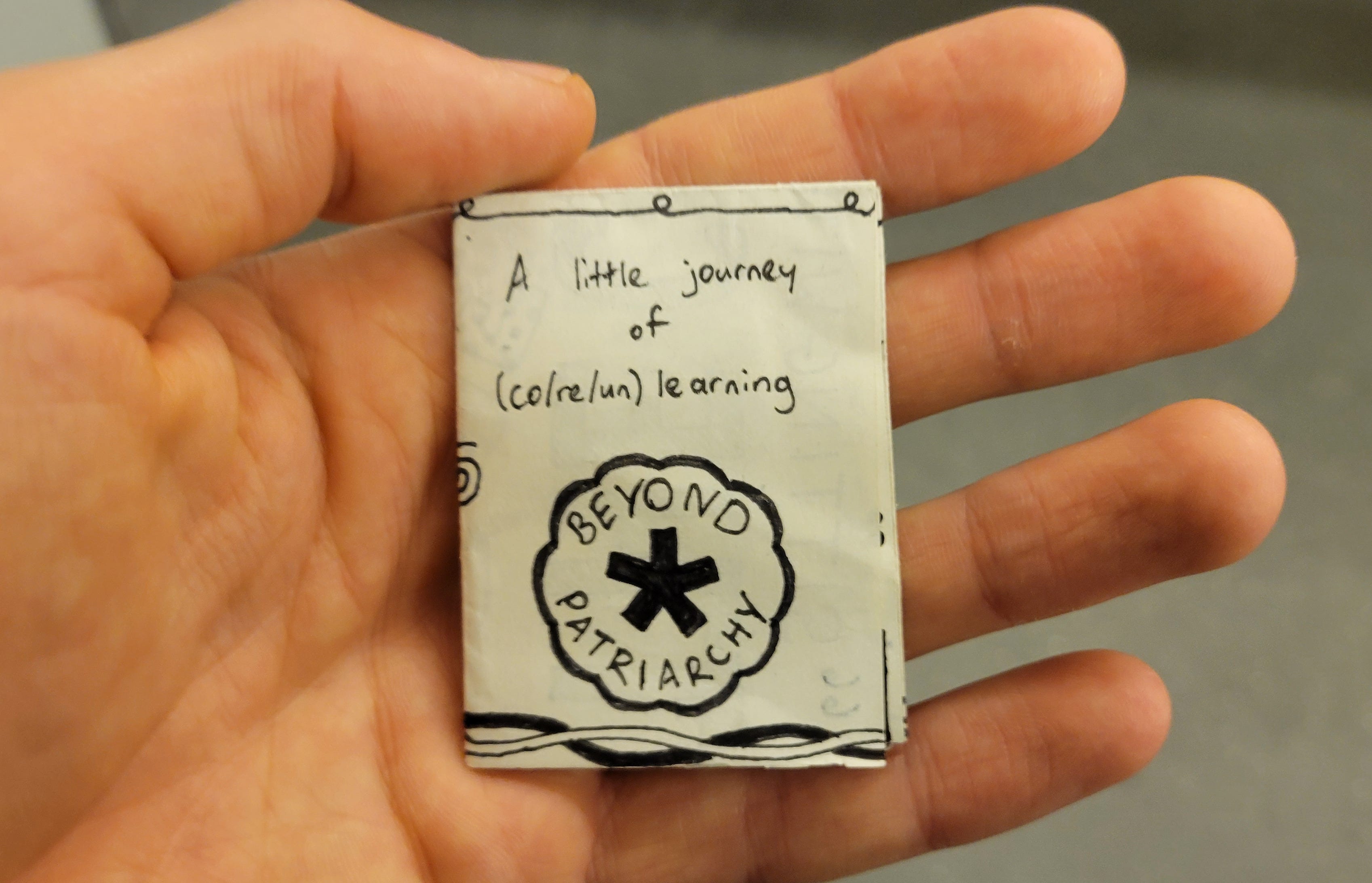
Over the past two years, Beyond Patriarchy has been a lived experiment in collective learning, exploring the question:
How we can move beyond patriarchy – not just intellectually, but in the ways it shapes our relationships, bodies, and ways of organising?
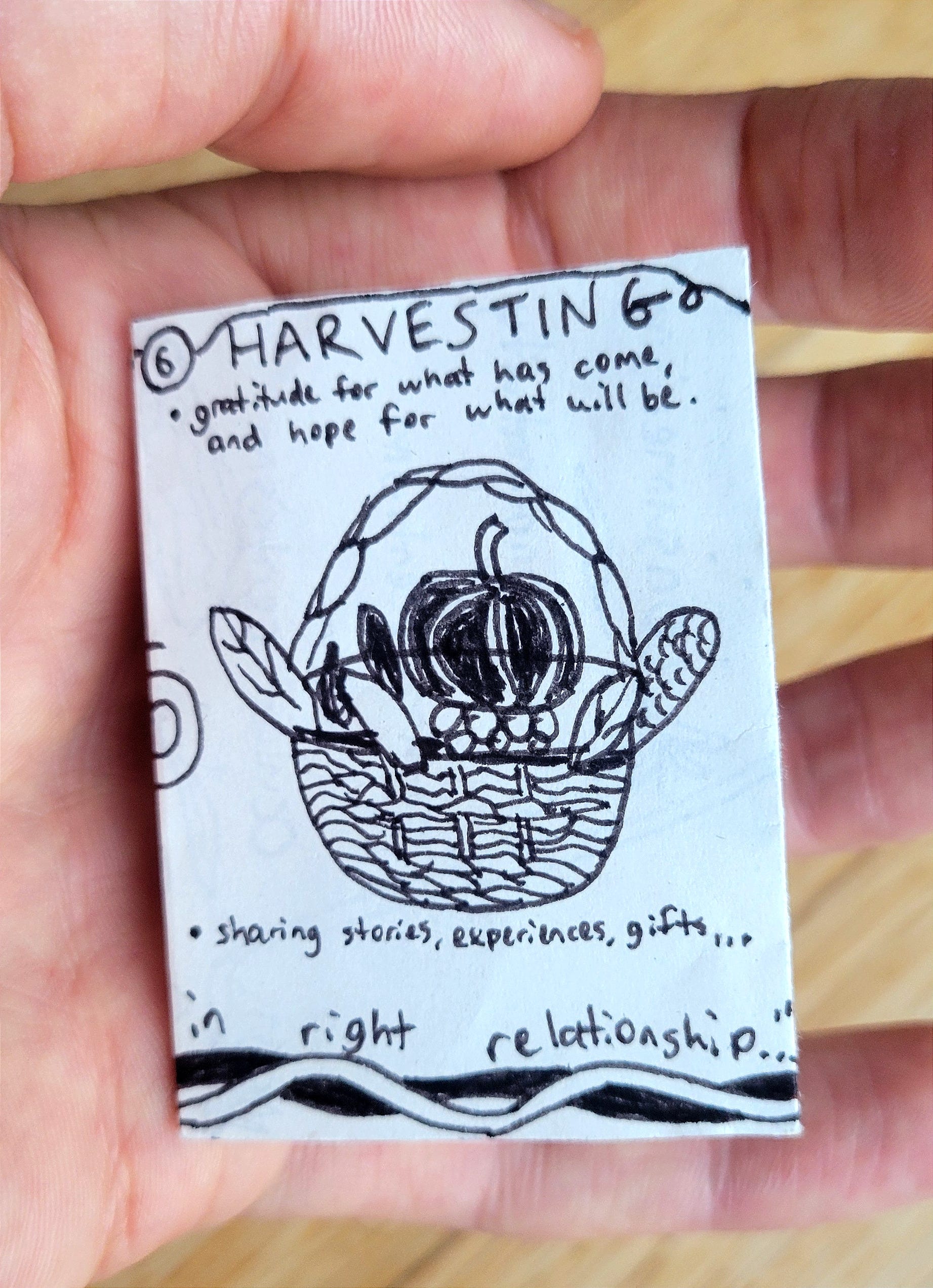
Alongside these journeys, I’ve been experimenting with generative journalism as a method for harvesting learning — not as documentation or evaluation, but as a continuation of the work itself.
This article reflects on how generative interviews have been woven into Beyond Patriarchy, what they have made possible, and the tensions I continue to hold in applying this approach in a field shaped by harm, accountability, and long histories of oppression.
From extraction to accompaniment
Traditional approaches to capturing learning — interviews, testimonials, surveys — often carry an extractive logic. They ask people to summarise, explain, or justify what changed, frequently collapsing complex journeys into neat narratives of insight or redemption.
Generative journalism offers a different orientation. Rather than asking participants what happened or what went wrong, these conversations begin with questions like:
- What feels most alive now?
- What ‘seed’ did you plant, and what might it need to grow?
- What meaning is being made, even if it’s unfinished?
In the context of Beyond Patriarchy, where many participants arrive already carrying strong self-critique — aware of harm, complicit in systems they did not choose, and often quick to judge themselves for not having ‘done enough’ — this shift matters.
Joshua Stehr, a participant in the first learning journey in 2024, shared in our conversation how he experienced this:
“Through the journey emerged a lot of lurking feelings of shame and guilt from the way that I’ve behaved as a man. Speaking with others in the group around similar behaviours, we were able to share together the context in which this was born, and really work on taking accountability for it.”
The generative interviews following the learning journey continued to create space for reflection that does not default to self-berating or defensive justification, but stays oriented towards responsibility and possibility.
Conversation as continuation, not closure
One of the most powerful aspects of generative journalism in this work has been its refusal of closure. The interviews are not framed as ‘looking back’ on a completed journey. Instead, they explicitly position themselves as ongoing: picking up threads from the final sessions, returning to commitments that were named, and exploring how learning continues to ripple outward — into relationships, communities, activism, and everyday practice.
This has helped reframe the learning journeys themselves. Rather than being six-week containers that produce outcomes, they become moments of intensification within longer arcs of unlearning. The interviews act as gentle bridges between the protected space of the group and the wider worlds participants inhabit.
Another participant, Mike Romig, reflected on this transition in our interview at the end of the learning journey:
“My main commitment is to never feel that it’s ‘done’, that I’ve ‘got it’, that it’s ‘fixed’. To always be reflecting and self-observing, and also getting feedback from others on what I can improve and change … I’m very committed to continuing this journey, not just as an individual but really being part of the movement, being part of the larger change.”
For readers — especially those considering joining future journeys — this offers a different entry point. Instead of polished success stories, they encounter people mid-process: thoughtful, uncertain, committed, and still learning.
Strengths: what this approach makes possible
Applied in this way, generative journalism has opened several important possibilities within Beyond Patriarchy:
- Depth without spectacle: The conversations allow for nuance, slowness, and contradiction without turning vulnerability into performativity.
- Distributed authority: Participants are not positioned as case studies or representatives; their voices sit alongside the facilitation and feminist theory that informed the work.
- Systems thinking made lived: By tracing how insights move across scales — body, relationship, community, ecology — the interviews embody systems thinking rather than explaining it abstractly.
- An ethics of invitation: Readers are invited into reflection rather than persuaded or instructed; resonance becomes the metric.
You can see how these show up in the conversations on the Beyond Patriarchy blog.
Tensions and limitations I’m holding
At the same time, applying generative journalism in work focused on patriarchy brings real tensions — some of which can’t be fully resolved, only carefully navigated.
One recurring edge is how we relate to the past. When conversations turn towards harm, complicity, or moments of rupture, there is a fine line between acknowledging what has been and getting stuck there. Especially for men, reflection can easily slide into: recounting failures, rehearsing guilt, or narrating oneself as ‘the problem’.
While accountability is essential, I’ve noticed that dwelling too long in what went wrong can drain generative energy and subtly recentre the self — precisely what this work seeks to move beyond. Generative journalism helps, but it doesn’t automatically solve this. It requires constant attentiveness to how questions are asked, where attention is placed, and whether the conversation is opening space or narrowing it.
Another tension lies in visibility and responsibility. Sharing these conversations publicly risks over-exposure, misinterpretation, or the sense that deep work can be consumed passively. Holding consent, context, and care — while still allowing the work to circulate — remains an ongoing practice rather than a settled protocol.
Learning to ask differently
Perhaps the most important learning from this experiment has been a shift in my own facilitation and inquiry. Generative journalism sharpens my attention to things like: where energy rises or drops, when language becomes abstracted from lived experience, and how easily questions can invite defensiveness or collapse.
It has reinforced a simple but demanding practice: stay with what is alive, without rushing to fix or resolve it. In this sense, generative interviews are not an add-on to Beyond Patriarchy. They are a continuation of its core commitment: to slow down, to compost rather than discard, and to trust that new forms of understanding and action emerge when people are met with care, curiosity, and responsibility.
As this work moves into its next phase, generative journalism will remain one of the ways we listen — not for answers, but for what is trying to grow.
An invitation to stay with the questions together
The questions surfaced here are not unique to Beyond Patriarchy. Across movements, organisations and communities, many of us are grappling with similar tensions:
- How do we learn from the past without becoming trapped by it?
- How do we hold accountability without collapsing into blame and shame?
- How do we tell stories that keep futures open rather than foreclosed?
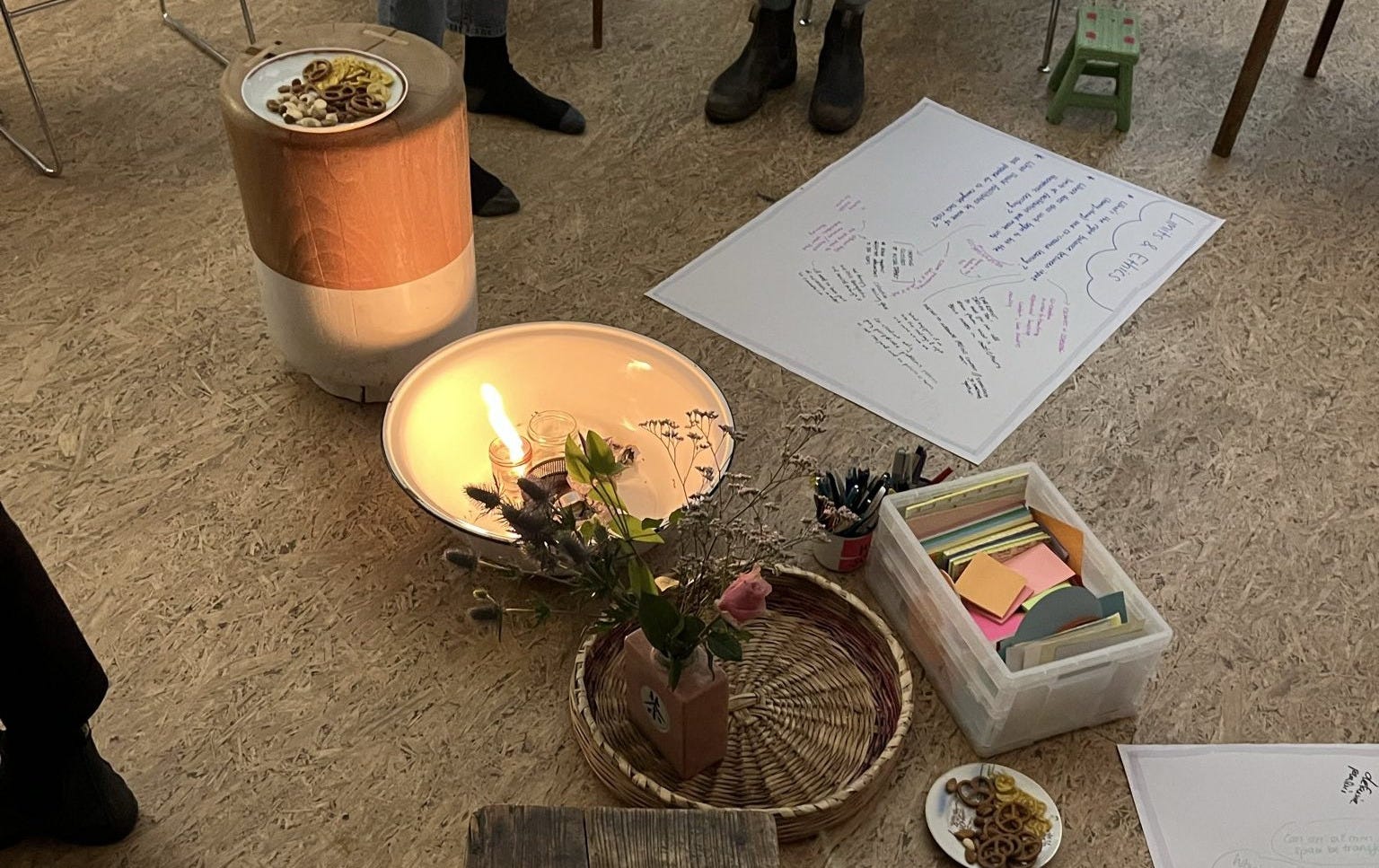
This is where the Generative Journalism Alliance situates its work — not as a methodology to be applied, but as a practice of inquiry to be cultivated together. Through capacity-building workshops, practitioner sensing circles, and collaborative inquiries, GJA supports people working at the edges of change to ask better questions, listen more carefully, and stay with what is emerging.
If these reflections resonate, you’re warmly invited to join that ongoing inquiry — whether through training, peer learning, or simply staying in conversation.
To learn more about Beyond Patriarchy you can visit the website, or explore this two-part series on ‘What we are learning’ and ‘What is emerging’ from two years of practice. If you’re interested in joining one of the next learning journeys, you can pre-register here.
 Beyond Patriarchy